YNAB Review 2026: Is This the Best Budgeting App for Beginners?
If you’ve spent any time researching money apps, you’ve probably seen YNAB (You Need A Budget) mentioned again and again. It’s one of the most talked-about tools in personal finance circles, and it has a loyal, almost cult-like following. But is the hype justified? This YNAB Review takes an honest look at the app’s pricing, features, and real-world usability so you can decide whether it deserves a spot on your phone.
At Beginners Budget, we test every tool with one question in mind: will this actually help someone who is new to budgeting? That’s the lens we’re using here, and it shapes everything from how we evaluate the learning curve to how we weigh the subscription cost against the results real users report.
What Is YNAB? A Quick Overview
YNAB is a personal finance app built around a philosophy called zero-based budgeting. Instead of just tracking what you’ve already spent, YNAB asks you to assign every incoming dollar a specific job before you spend it — rent, groceries, savings, debt payoff, and so on — until your income minus your allocations equals zero. Nothing sits idle in a vague “checking account” limbo.
This approach is different from passive tracking apps that simply categorize your spending after the fact. YNAB wants you to be proactive, which is exactly why it tends to produce strong results for people willing to put in a little effort each week.
YNAB Review: Key Features Every Beginner Should Know
Here’s what stood out most during our testing:
YNAB Review: Zero-Based Budgeting Made Simple
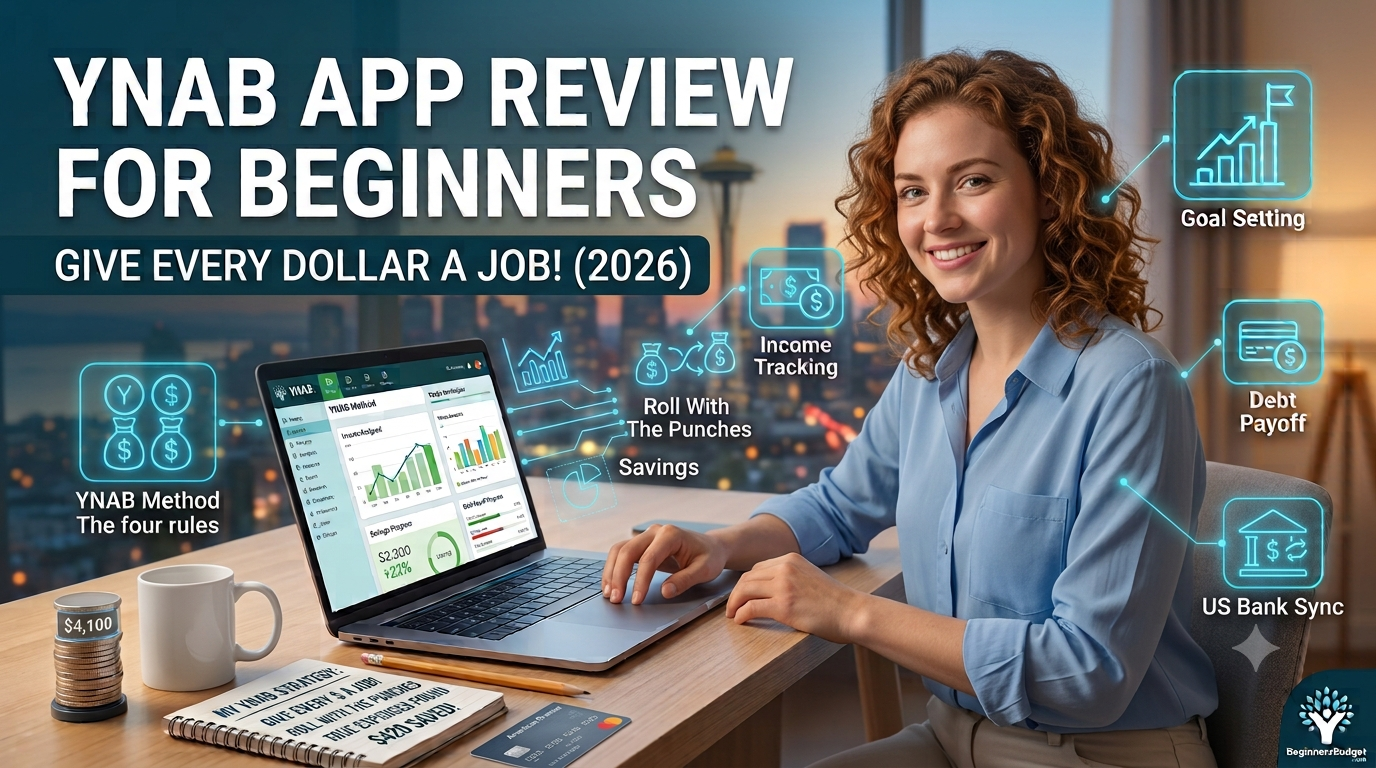
The core of any honest look at this app starts with the four rules that guide the entire system:
- Give every dollar a job — allocate all your income to categories immediately.
- Embrace your true expenses — set aside money monthly for irregular costs like car repairs or annual insurance premiums, so they never catch you off guard.
- Roll with the punches — if you overspend in one category, move money from another instead of panicking.
- Age your money — the goal is to eventually be spending money you earned weeks ago, not living paycheck to paycheck.
For a beginner, this framework can feel like a lot at first. But it’s also one of the clearest, most structured systems available, which is part of why so many personal finance educators recommend it to people just starting out.
Bank Syncing and Real-Time Tracking
YNAB connects directly to your bank and credit card accounts through a secure syncing service, automatically importing transactions so you’re not manually logging every coffee purchase. You can also enter transactions by hand if you’d rather keep things fully manual or avoid linking your accounts.
Goal Tracking and Debt Payoff Tools
Beyond day-to-day budgeting, YNAB includes built-in goal-setting features for savings targets, debt payoff timelines, and recurring “true expense” categories. It also includes a debt paydown calculator that shows how extra payments shorten your payoff date.
Education Built Into the App
One thing that sets YNAB apart from most competitors is its investment in teaching the method itself. YNAB offers free workshops, a podcast, and video tutorials that walk new users through the philosophy step by step — a genuinely useful resource if you’re a beginner who has never budgeted intentionally before.
Pricing and Plans Explained
Here’s where a lot of people hesitate. YNAB costs $14.99 per month or $109 per year (roughly $9.08/month when billed annually), and there is no permanent free tier. New users get a 34-day free trial with no credit card required, and verified college students can often get a full free year through YNAB’s student program. A single subscription covers up to six people, which meaningfully lowers the per-person cost for couples or families budgeting together.
Compared to free alternatives, this makes YNAB one of the pricier options on the market. Whether that’s worth it comes down to a simple question: are you willing to spend a few minutes most days actively managing your budget? If the answer is yes, the structure YNAB provides can easily pay for itself through reduced overspending and better awareness of where your money goes.
Who Should (and Shouldn’t) Use YNAB
Based on everything covered in this YNAB Review, this app is a strong fit if:
- You’re a beginner budgeter who wants a structured, guided system rather than a blank spreadsheet.
- You’re tired of “set it and forget it” apps that show you where your money went but never help you plan ahead.
- You’re comfortable with a short learning curve in exchange for long-term control over your spending.
It’s probably not the right fit if:
- You want a completely free tool with no subscription cost.
- You prefer a passive app that tracks spending automatically without requiring regular check-ins.
- You need to manage multiple currencies within a single budget, since YNAB only supports one currency per budget.
Pros and Cons Summary
| Pros | Cons |
| Genuinely effective zero-based budgeting method backed by two decades of refinement | No free tier beyond the 34-day trial |
| Clean, intuitive interface once you get past the initial learning curve | Requires linking bank accounts through a third-party syncing service, which some privacy-conscious users may want to avoid |
| Strong educational resources for true beginners | Learning curve can feel steep in the first week or two |
| Family sharing for up to six people on one subscription | Relatively expensive compared to some budgeting apps aimed at absolute beginners |
| No hidden fees or paywalled premium features |
Final Verdict
So, does YNAB live up to the hype? For beginners who are genuinely ready to change their relationship with money, yes — this YNAB Review concludes that it’s one of the most effective personal finance apps available, precisely because it demands active participation rather than passive tracking. The price tag is real, but so are the results reported by long-time users who credit the app with breaking the paycheck-to-paycheck cycle.
If you’re on the fence, the 34-day free trial is the easiest way to find out whether the method clicks for you before committing a single dollar. Try building one month’s budget from scratch, and you’ll have a clear answer about whether YNAB deserves a permanent place in your financial toolkit.