YNAB App Review for Beginners: Is It Worth It in 2026?
Finding the right digital tool to manage your income can completely transform your personal finances. If you have been searching for an effective way to stop living paycheck to paycheck, you have likely come across You Need A Budget (YNAB). In this comprehensive YNAB App Review for Beginners, we will break down every feature, cost, pro, and con to help you decide if this popular software belongs on your smartphone.
Budgeting manually on paper or spreadsheet templates works for some. Yet automated software makes daily tracking far more consistent. YNAB has built a cult-like following over the past decade by using a unique methodology designed to give every single dollar a job before you spend it.
Why Read a YNAB App Review for Beginners Before Buying?
Before committing to a paid software subscription, budget-conscious individuals need to know whether an app provides a real return on investment. Taking the time to read a detailed YNAB App Review for Beginners ensures you do not waste money on software that does not fit your daily lifestyle or financial goals.
Unlike traditional trackers that simply show you where your money went after you spent it, YNAB focuses on proactive allocation. The primary benefits of implementing this system include:
- Total Spending Clarity: You always know exactly how much cash is available for groceries, bills, and fun before opening your wallet.
- Proactive Debt Elimination: Users systematically assign funds toward credit card balances to eliminate high-interest debt faster.
- Stress-Free Bill Payment: By breaking large annual or semi-annual expenses into monthly targets, surprise bills become a thing of the past.
Key Features Covered in This YNAB App Review for Beginners
To understand why this platform stands out in the crowded market of personal finance software, we need to evaluate the four foundational rules that power the app:
1. Give Every Dollar a Job
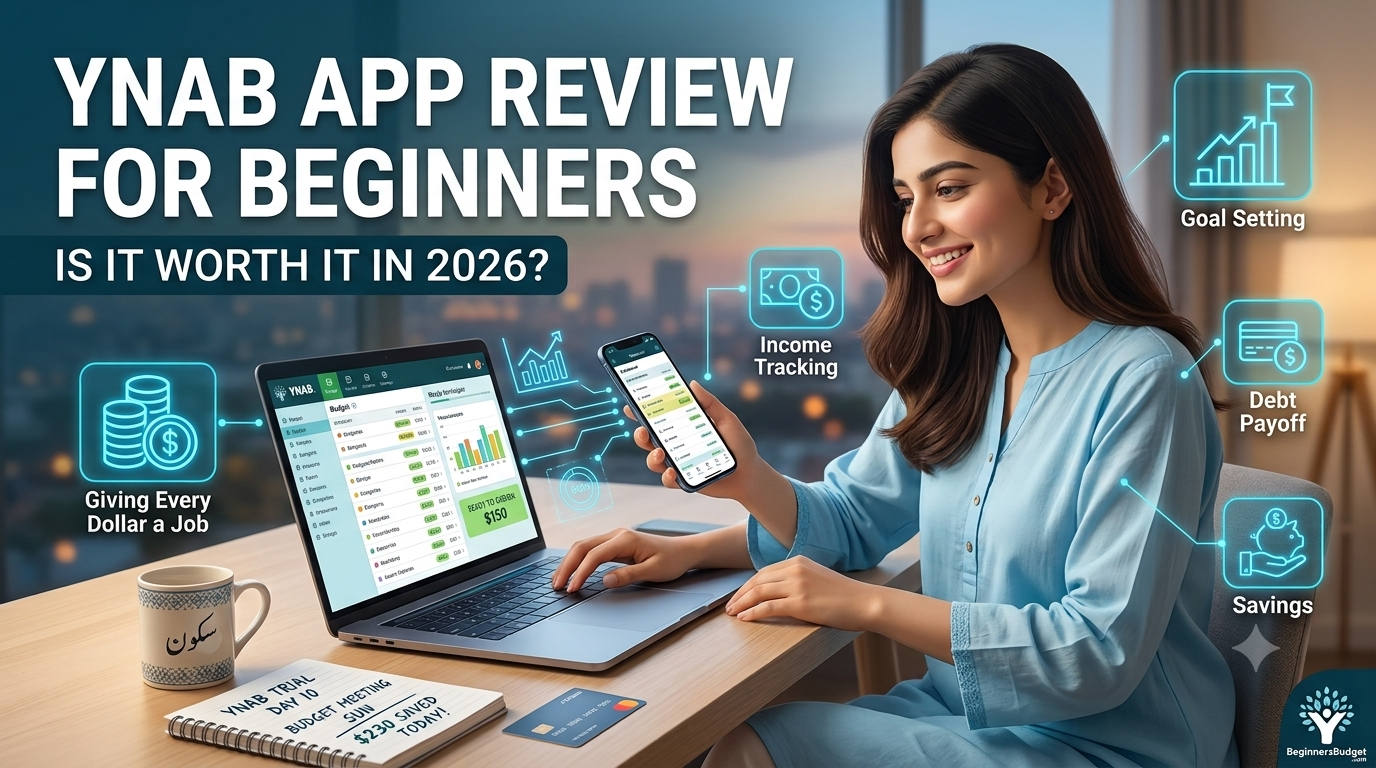
When income hits your bank account, YNAB forces you to assign those dollars to specific categories (rent, groceries, emergency savings, entertainment) until your “Ready to Assign” total reaches zero. This classic approach makes it the best zero based budgeting app on the market today.
2. Embrace Your True Expenses
Instead of getting caught off guard by large intermittent bills like car insurance or holiday gifts, YNAB helps you break them down into manageable monthly savings targets.
3. Roll With the Punches
Overspending happens to everyone. When you spend more than planned in one category (like dining out), YNAB makes it seamless to move funds from another category (like entertainment) to keep your overall balance aligned.
4. Age Your Money
The ultimate goal of the platform is to help you reach a point where you are spending money you earned at least 30 days ago, breaking the paycheck-to-paycheck cycle permanently.
Ease of Use & Mobile App Experience
The mobile interface (available on iOS and Android) is modern, clean, and fast. When you make a purchase at a physical store, you can enter the transaction manually in under 10 seconds or let the automatic bank sync import it for you.
The dashboard provides colorful progress bars showing how much assigned money remains in each category. While there is a slight learning curve during the first week as you adapt to zero-based principles, the app includes guided tutorials and responsive customer support to help new users get comfortable.
Pricing: What Does YNAB Cost in 2026?
Understanding subscription fees is critical when evaluating a budgeting app review. As of 2026, YNAB offers two pricing tiers:
- Monthly Plan: $14.99 per month
- Annual Plan: $99 per year (breaks down to roughly $8.25/month)
- Free Trial: 34 days (no credit card required)
- Student Discount: College students receive 1 free year with proof of enrollment.
While $99 per year might seem steep for a budget-focused reader, YNAB claims that the average new user saves over $600 in their first two months by curbing unintentional spending.
YNAB vs Free Budget Apps
When deciding how to manage money on a budget, many newcomers naturally compare paid tools against free alternatives like EveryDollar (free version), PocketGuard, or simple Google Sheets templates.
| Feature / Metric | YNAB | Free Budget Apps |
| Pricing | $99/year (34-Day Free Trial) | Free or Free with Ads |
| Budgeting Style | Zero-Based Proactive | Expense Tracking / Passive |
| Bank Syncing | Included (Seamless) | Manual or Limited Sync |
| Credit Card Handling | Advanced Automated Logic | Basic Tracking |
| Learning Curve | Moderate | Very Low |
If you only need basic tracking to see where your money went last week, a free option might suffice. However, if you need a structural behavioral shift to stop overspending, YNAB’s proactive system offers far superior long-term results.
Pros and Cons for Beginners
Pros
- Direct, reliable bank syncing across thousands of financial institutions.
- Powerful credit card management logic that automatically reserves cash for monthly balances.
- Multi-device synchronization across phone, tablet, and web browsers.
- Outstanding educational resources, including free live workshops and daily video guides.
Cons
- Higher annual price point compared to basic trackers.
- Takes 1 to 2 weeks to fully grasp the zero-based methodology.
- Requires active participation rather than full hands-off automation.
Final Verdict: Should You Download YNAB?
If you are serious about transforming your relationship with money and want a structured blueprint to eliminate debt, YNAB is worth every penny. Take advantage of their generous 34-day free trial to test the features risk-free and decide if it fits your daily routine!